Notes from the CFO AI Summit 2026
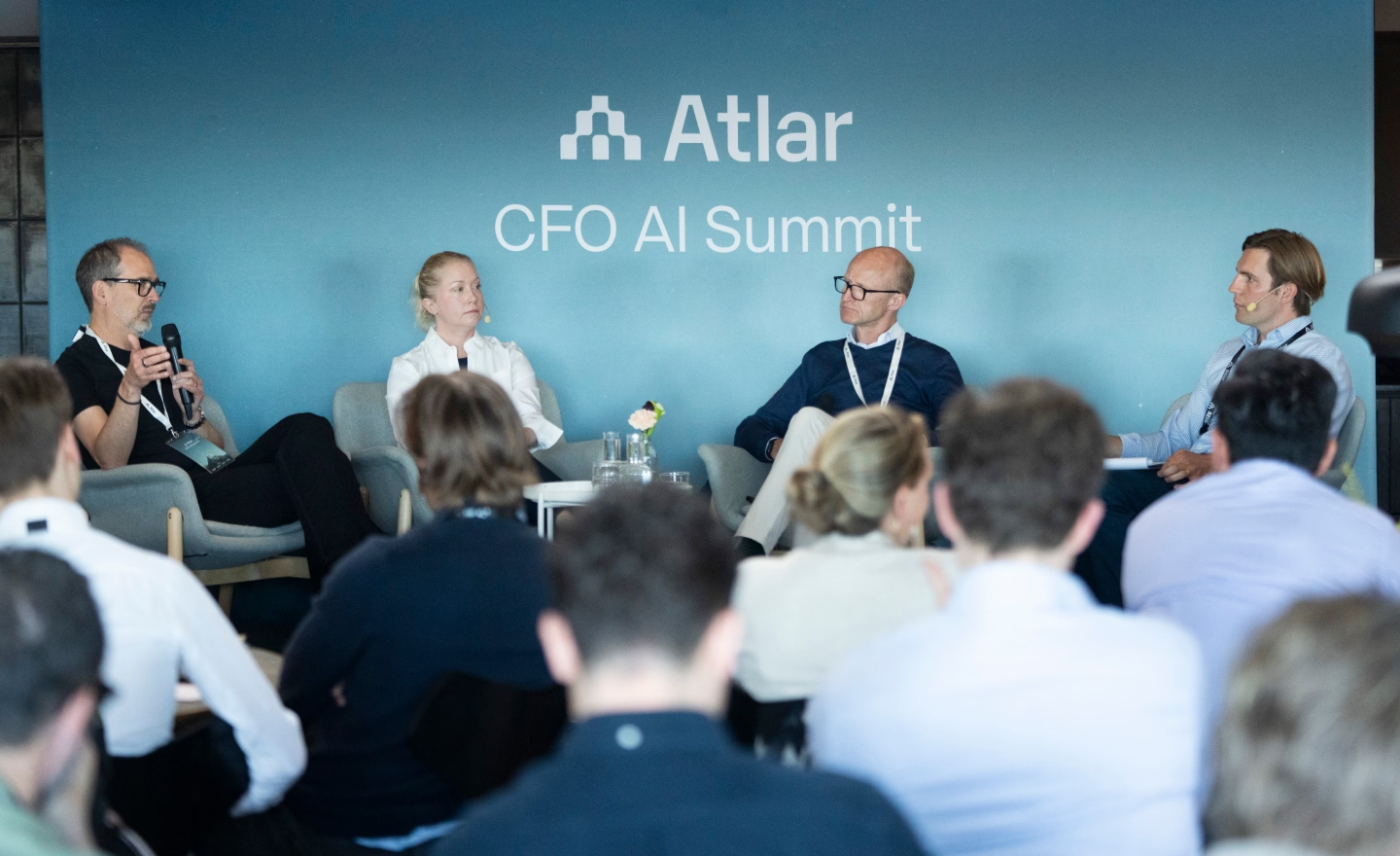
Around 200 finance leaders gathered in Stockholm last Friday for our CFO AI Summit. The same problem came up again and again: boards and CEOs want an AI story from finance, often before finance is ready to deliver one. Matias Salonen of Lovable gave the day-one answer: an AI-native finance function built from scratch, through hypergrowth, with a lean team.
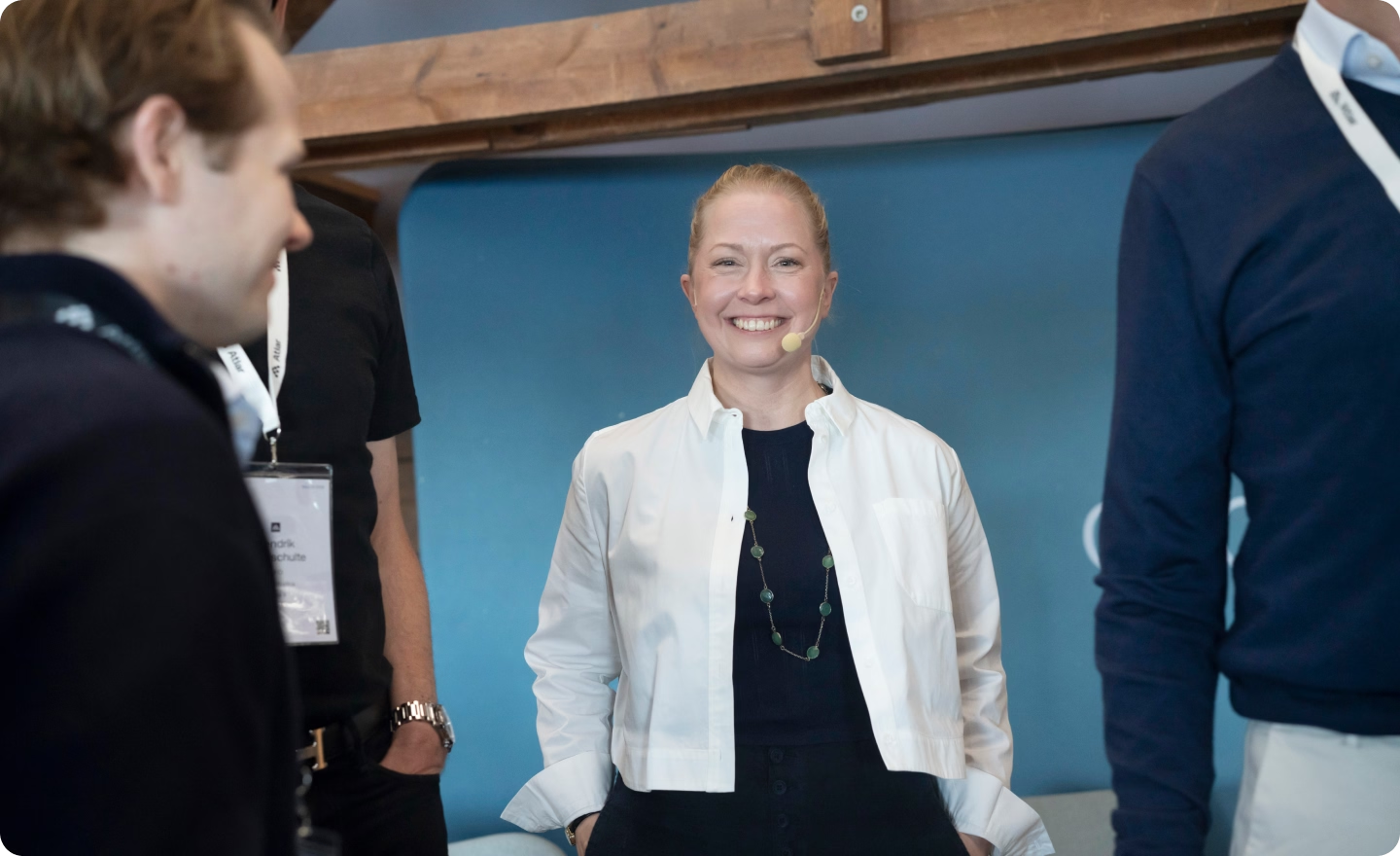
Following Matias, we heard from a panel of seasoned CFOs with decades of experience under their collective belt. Emily Villatte at Stillfront, Hendrik Bitterschulte at Acne Studios, and Richard Woodward at Neko Health gave the answer most of the room recognized: bringing AI into finance teams that already operate at scale, under audit, and across markets. Across both halves of the morning, the conversation kept returning to the same conclusion: when AI underperforms in finance, the problem is rarely the model.
AI in finance starts below the waterline
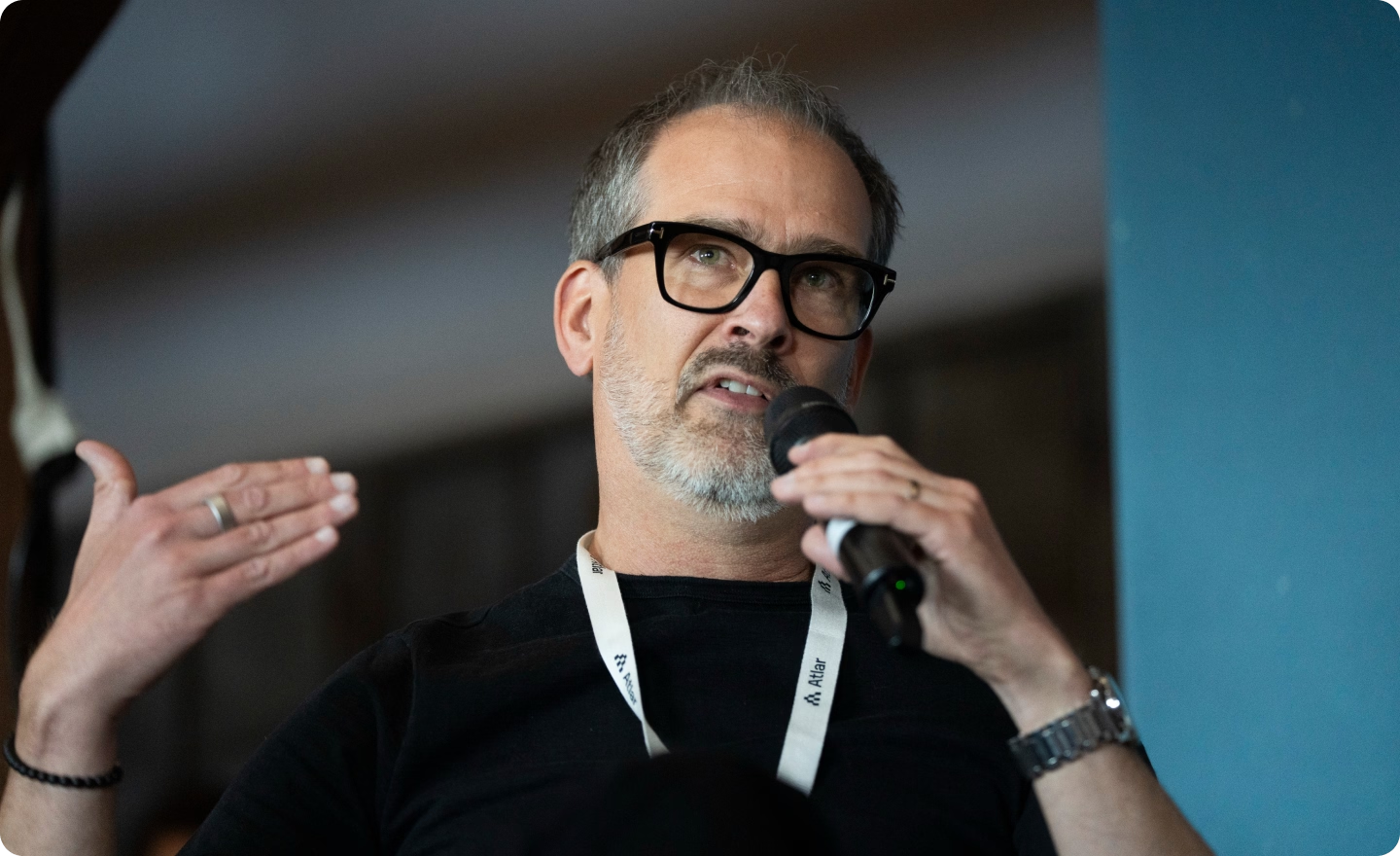
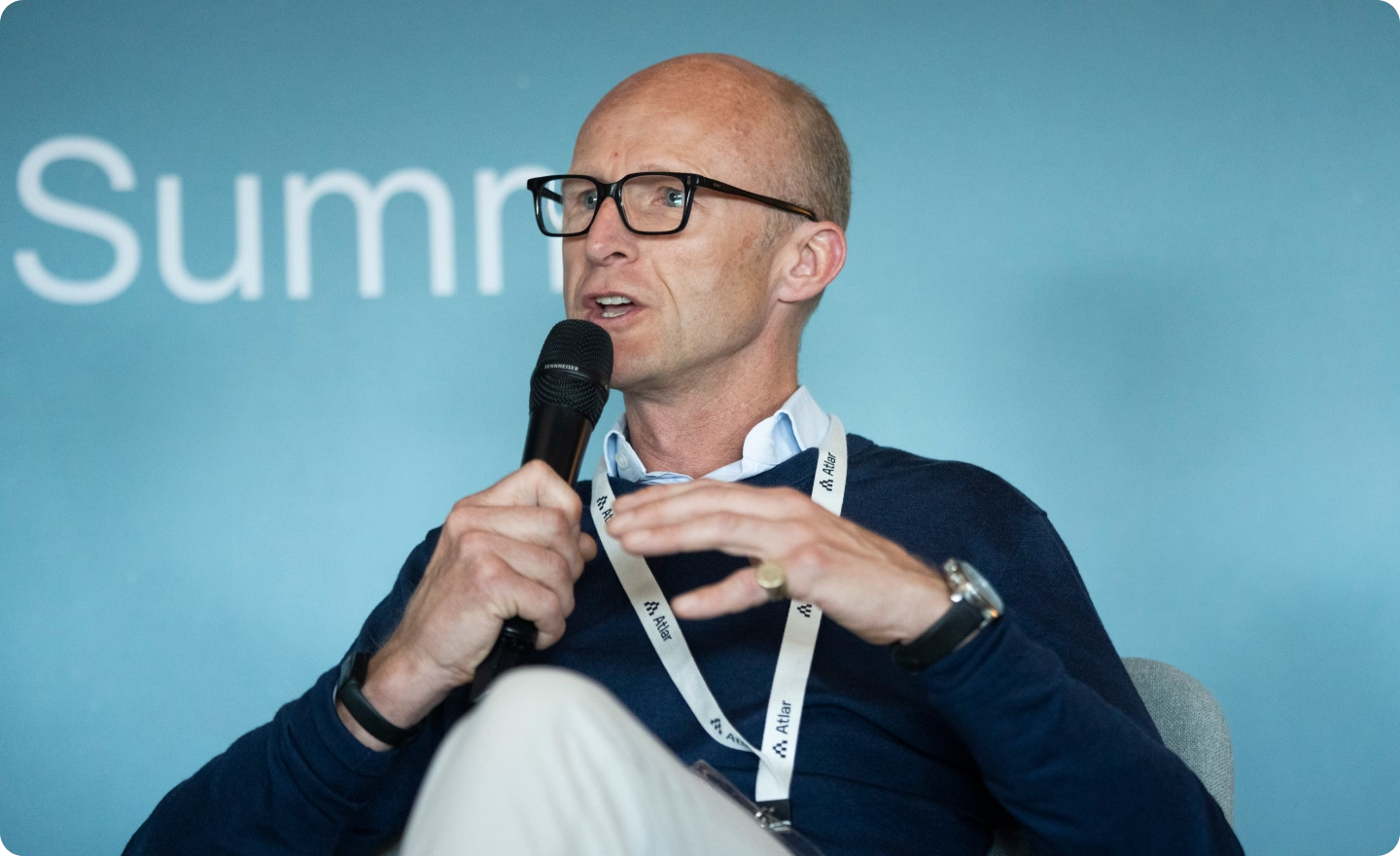
The models are already capable enough for most of the work a finance function does. As our co-founder Joel Wägmark argued on stage, what they lack is somewhere to operate. Treasury software was built for humans to click through, and bank data is messy and rarely sits in one place. Treasury policy lives in PDFs that no machine can read. Even the most capable agent has nothing to reason over and no reliable way to act.
The CFO panel made the case in plainer terms. Every panelist landed on the data foundation as the place most of the real work happens: slow, often thankless, and the part everything else depends on. Hendrik Bitterschulte called it the difference between AI that accelerates decision-making and AI that scales confusion.
The controls piece sits right alongside. Finance is deterministic, the numbers are either right or they're wrong, and every CFO in the room is going to have to put their name on what an agent does. On the panel, Emily Villatte described the pressure that creates: AI-enabled boards and CEOs can already get 70% of the way to an answer themselves, and then start asking why finance is slower.
Richard Woodward took the point further: SOX compliance isn't a 70% answer. Until policies are machine-readable, approval chains are explicit, and audit trails are queryable rather than reconstructable, the controls haven't caught up.
Simplify before you automate
Most AI-in-finance conversations skip straight to automation. That was the cleanest critique in Matias's keynote. He borrowed Elon Musk's five-step engineering framework — understand, delete, simplify, accelerate, automate — and made the case that the order isn't incidental. Put simply, you can't hand an agent a workflow you haven't yet decided how to run.
Lovable spent 2025 on the first three steps: working out what each part of their finance stack was actually solving for, deleting what didn't earn its place, then simplifying what should have been one thing. As they rebuilt it, each system was chosen for whether an agent could operate on it, ahead of whether the team liked the interface. Most of the team's progress now is downstream of that year. Finance at Lovable is two people, running the operations behind a company that reached $400M ARR in 15 months.
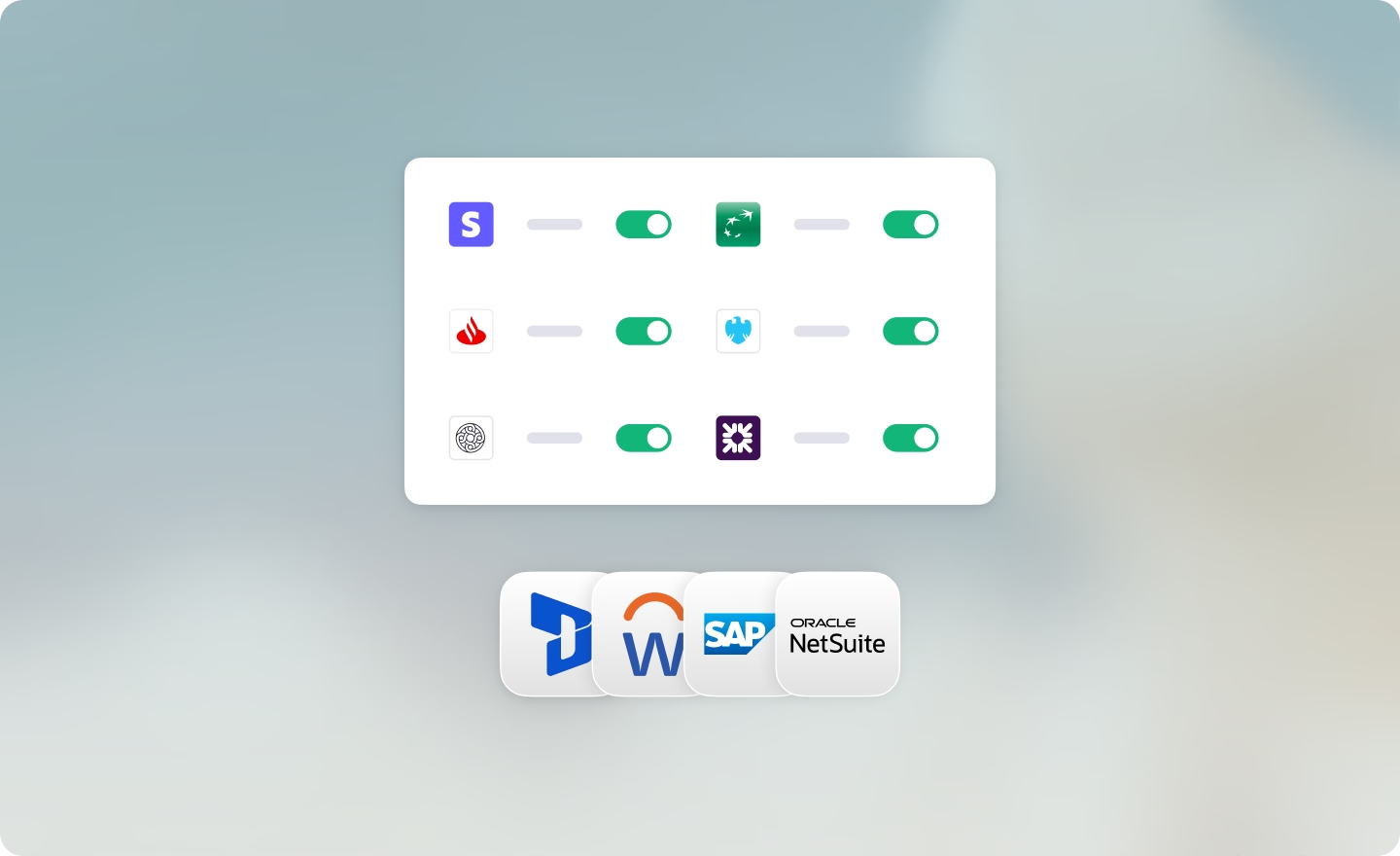
Lovable's stack now runs from the ledger to the bank. Their treasury sits on Atlar, integrated with their accounting platform Light so AI can operate across both. Atlar was also the first to use J.P. Morgan Payments' new API to connect its agents to bank data in seconds; from the day Lovable went live, its agents were reviewing payments, reconciling transactions, and generating forecasts.

Less reporting, more leading
The bigger question was what finance is for once agents handle more of the recurring work. Matias had the sharpest take on it: the function exists to define the business model, defend it, and accelerate it. For years, finance teams have spent most of their time reporting on the business. What he was describing is a function that finally gets to spend most of its time leading it.
Nobody on the panel claimed to be there yet, even among the most advanced teams in the room. Hendrik Bitterschulte described AI getting things materially wrong at his level almost daily, with board presentations still going through human checks. But the direction was uncontested. Traditional finance: humans do the work, tools assist. AI-native finance: agents do the work, humans decide what matters. The teams already moving toward the second model are the ones that did the work below the waterline first.
One of the sharper observations of the morning came from Emily Villatte: in 2026, the audience for an earnings call is no longer only human. Many of those listeners are now AI agents that scrape the transcript and run the audio through sentiment analysis in real time. A moment of vocal hesitation can widen a spread or move an analyst's recommendation. Investor relations, she argued, is becoming a question of data architecture as much as messaging.
An early look at our agents
Agents have already changed how software gets built, and they're about to do the same for finance. We started Atlar four years ago because treasury excellence had been a privilege of scale, and closing that gap meant building the bank connectivity that businesses had never had. It turned out to be the substrate agents need.
On Friday, Joel Wägmark walked through what's coming next: our treasury agents handling full workflows, scheduled to run on a customer's own data and policy, with results surfaced for a human to review.
More on that in the coming weeks. For a closer look at the agents, request a demo.
Thank you to everyone who joined us in Stockholm, and to our speakers Matias Salonen, Emily Villatte, Hendrik Bitterschulte, and Richard Woodward.

You can unsubscribe anytime.
Most recent